Below is the image embedded in this web page :
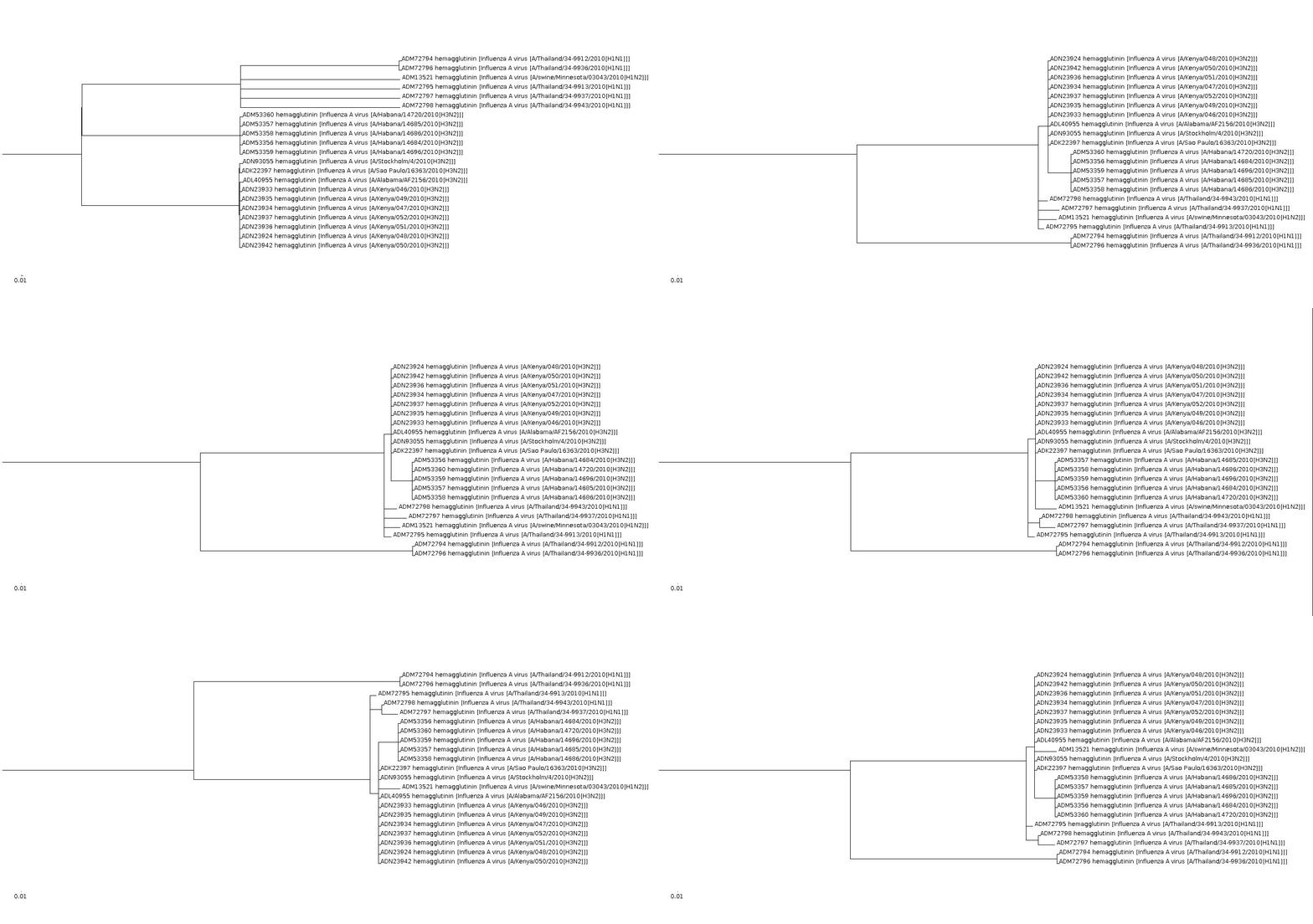
Using PERL and JAVA, and some previous phylogeny code, I made a neat tree animation!
PhyML is a likelihood hill-climbing algorithm for finding highly likely phylogenetic trees PhyML can be used to generate "tree traces"; a list of trees evaluated as part of its climb. Each tree in the trace is more likely than the one previous! I took the trees from a trace and fed their "newick strings" (http://en.wikipedia.org/wiki/Newick_format which represent a tree in a text format) to some existing Flu code I had that generates JPEG images of phylogenetic trees ("PhyloCanvas"). NOTE that the generated trees are of INFLUENZA VIRUS sequences (Influenza A)! As a result of this process, I generated a number of JPEG tree files. Then, using a GIFAnimator I found on the web, which I downloaded, I glued the tree images together to make an animated gif. The animated gif shows an animation of trees evaluated as part of the climb!
If you go here, EddiePERLAndJavaSource.pdf you can see some of PERL the source code that invokes the PhyloCanvas that draws animation frames and the JAVA code that “glues” the animation frames/jpegs into a single animated GIF file.
If you go here,
mytrees.gif
you can see the animation itself!
Below is the image embedded in this web page :
(see PhyML links if interested : http://www.atgc-montpellier.fr/phyml/ and http://www2.cnrs.fr/en/454.htm )
Here is a tarball of relevant Java source code files. Here is a link to javadocs generated from the source.